Paint
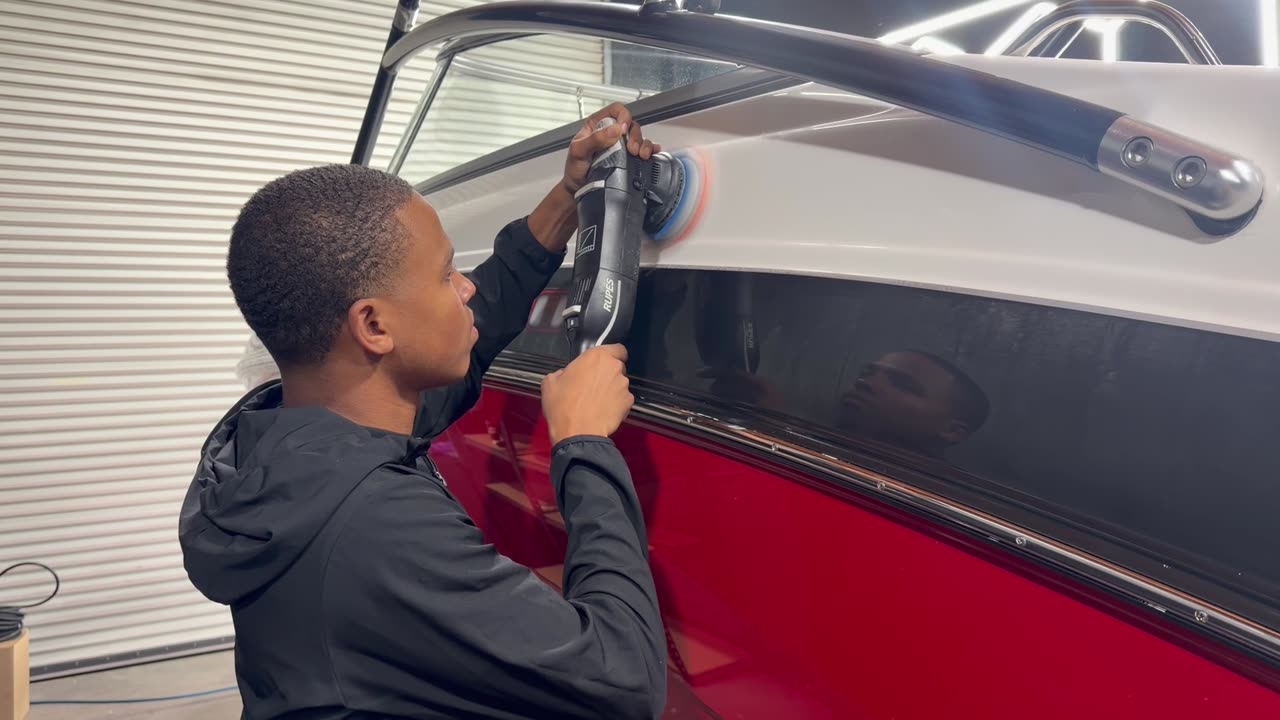
Dull, chalky or blotchy paint that stays that way after a wash is usually oxidation and years of swirl marks, not dirt. If the clear coat is intact, paint correction brings the color and gloss back with machine polishing, one step or two depending on how far gone it is.
Where we stop: clear coat that is peeling or flaking, scratches deep enough to catch a fingernail, rock chips, rust and dents. Those need a paint or body shop, and anyone who says polishing will fix them is guessing.
Headlights and trim
Yellow, cloudy lenses date a car more than anything else on it. Headlight polishing sands off the failed layer, polishes the lens clear and seals it. Black plastic trim that has gone gray and chalky can usually be cleaned and brought back toward black.
Where we stop: lenses that are cracked or fogged inside the housing, and trim that is cracked, brittle or broken. Those need new parts.
Interior
Steam and hot-water extraction pull years of dirt out of seats and carpet, and leather gets cleaned and conditioned. A clean often shows the interior is in better shape than it looked. Clean first, then decide what else it needs.
Where we stop: leather cracked through, split seams, torn panels, a cracked dash, worn-through carpet and any mold or mildew. Those go to an upholstery or trim specialist, or a mold specialist.
Engine bay
Years of dust and old grease under the hood, degreased, rinsed gently and dressed, so you can see bare metal, hoses and seals again. It is often the first thing people want on a car that has been stored.
Where we stop: anything mechanical. If the clean turns up a cracked hose, corrosion or a leak, that is a job for your mechanic.